When I graduated University of Georgia in 2008 amidst the Great Recession and soon started working for Lisa Borders’ Mayoral Campaign, that year was a crash course in Atlanta geography. Simultaneously, friends from high school who didn't go to New York, moved all across the city. A few common themes: we all wanted to limit our time in cars, have places to walk or bike, try out the latest restaurants, and meet new people. Being in your twenties in Atlanta when the Beltline was getting going was like a Christmas advent calendar every month, something was always popping up.
My wife and I met at Moe’s and Joe’s in Virginia Highland when she was a first year med student. For the next 5 years until we got married and really until we had our first child in 2017, weekends were filled with exploration of the city’s newest coffee shop or brunch spot. From West Egg to Dr. Bombay’s to Octane on the west side to Parish in Inman Park, if my wife had a free moment or day in residency we explored. Scatter in all the weekend festivals from Chomp and Stomp to Inman Park Festival, Cander Park, etc and it was an exciting time for Atlanta’s growth. The Beltline, which has produced the most massive economic boom since the Olympics, is a large reason. Zach Henson at the AJC wrote a recent piece about the Beltline and 20 years later.
When I think of how much time has been spent over the past 18 years all over Atlanta since I graduated college, the glaring blind spot where almost no time spent was downtown Atlanta. Outside of Slice which was a corner pizza spot in the Fairlie-Poplar district during the Borders’ campaign (the HQ was off Walton Street close to COP). There was little to do downtown for locals outside of the obvious: Ga Dome, Phillips / State Farm, Tabernacle, etc. Even those experiences were sporadic and contained.
Now that we’re officially two years into the South Downtown endeavor, I understand why downtown is such a blind spot for so many Atlantans, myself included. The simple answer is the geography of “Downtown Atlanta” is so big.
Central Atlanta Progress states that downtown Atlanta is 4 square miles – that is the equivalent of 640 city blocks. That is wild! To add a bit of context, 4 square miles in New York City is 14th street all the way up to 79th street between the Hudson River and 5th Ave! Or everything south of 14th street which includes the following neighborhoods: Meat Packing District, West Village, Greenwich Village, NoHo, East Village, Soho, Tribeca, Wall Street, Chinatown, and a few more. All of that could fit in “downtown Atlanta.”
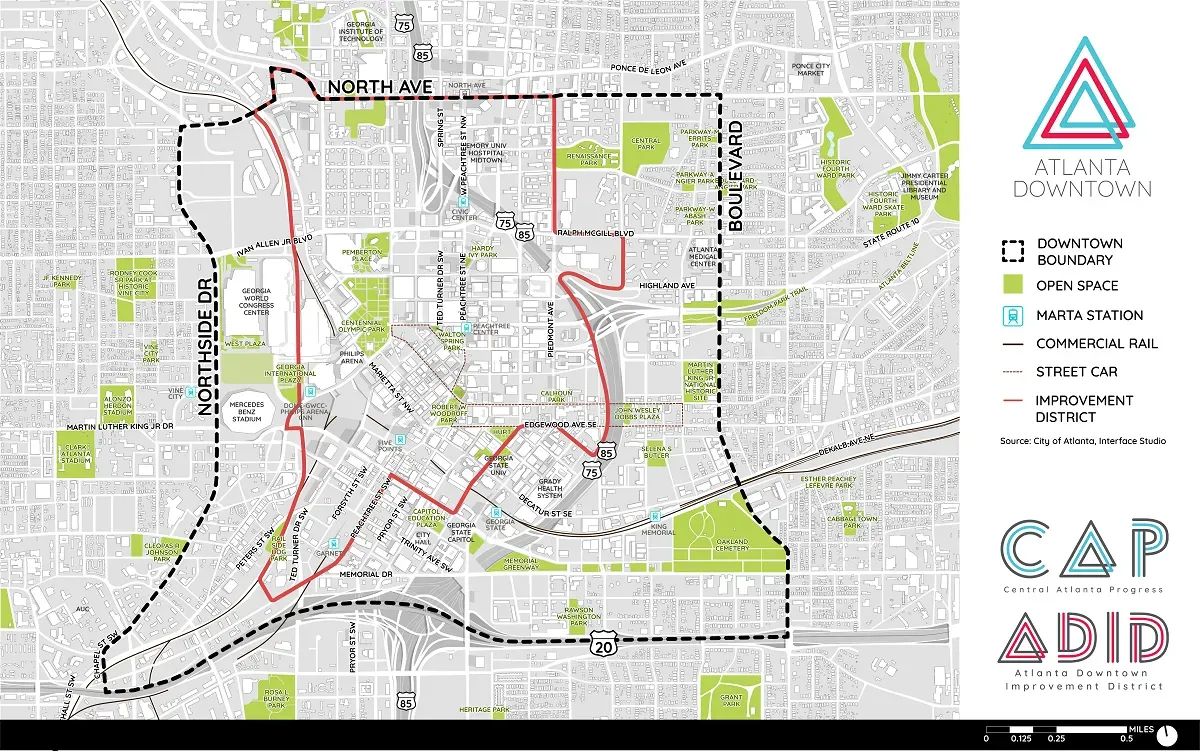
Atlanta Downtown Improvement District, which is the equivalent of downtown’s Midtown Alliance, is 1.2 square miles or the equivalent of 220 city blocks but that still doesn’t remedy that “downtown Atlanta” is so large and undefined that even locals have a difficult time understanding the geography.
To add a little bit more context of how large “downtown Atlanta” is for the average Atlantan, the boundary includes anything south of North Avenue, east of Northside all the way to Boulevard with I-20 cementing the southern boundary. Below is the official map.
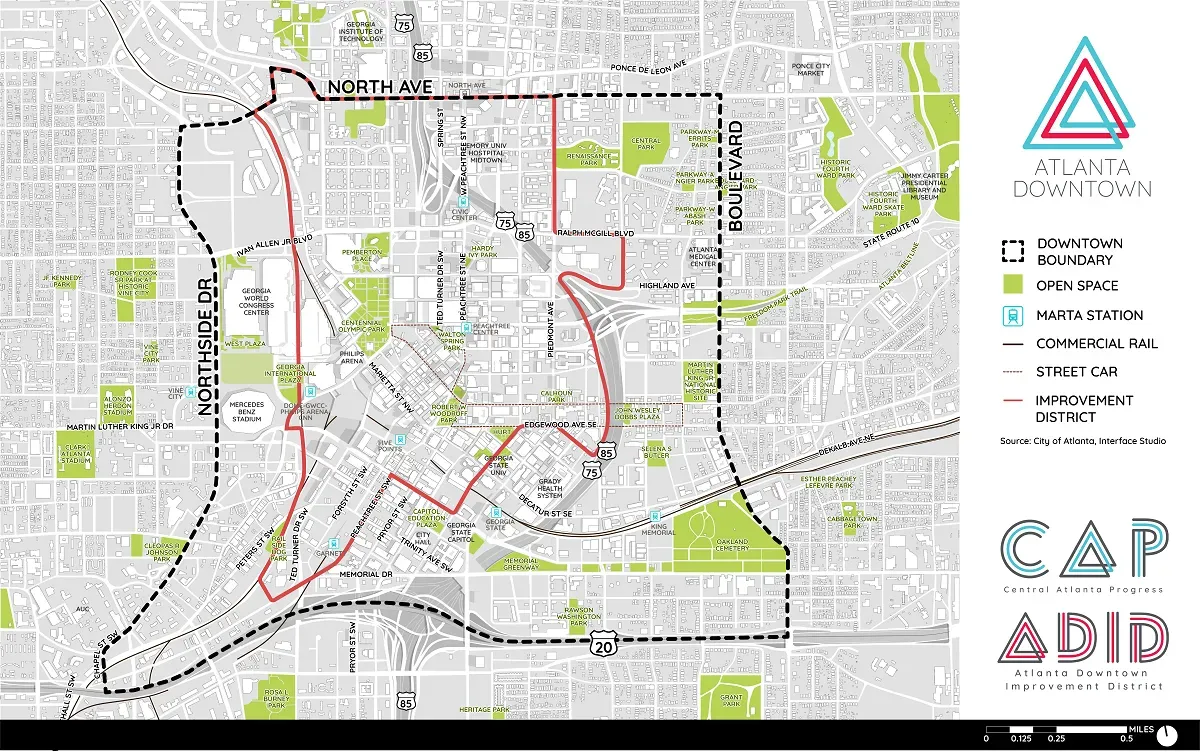
This means Emory Midtown Hospital is in downtown. It also means the tallest building in Atlanta, the Bank of America Plaza is in downtown Atlanta.
Jackson Street Bridge is also in downtown Atlanta.
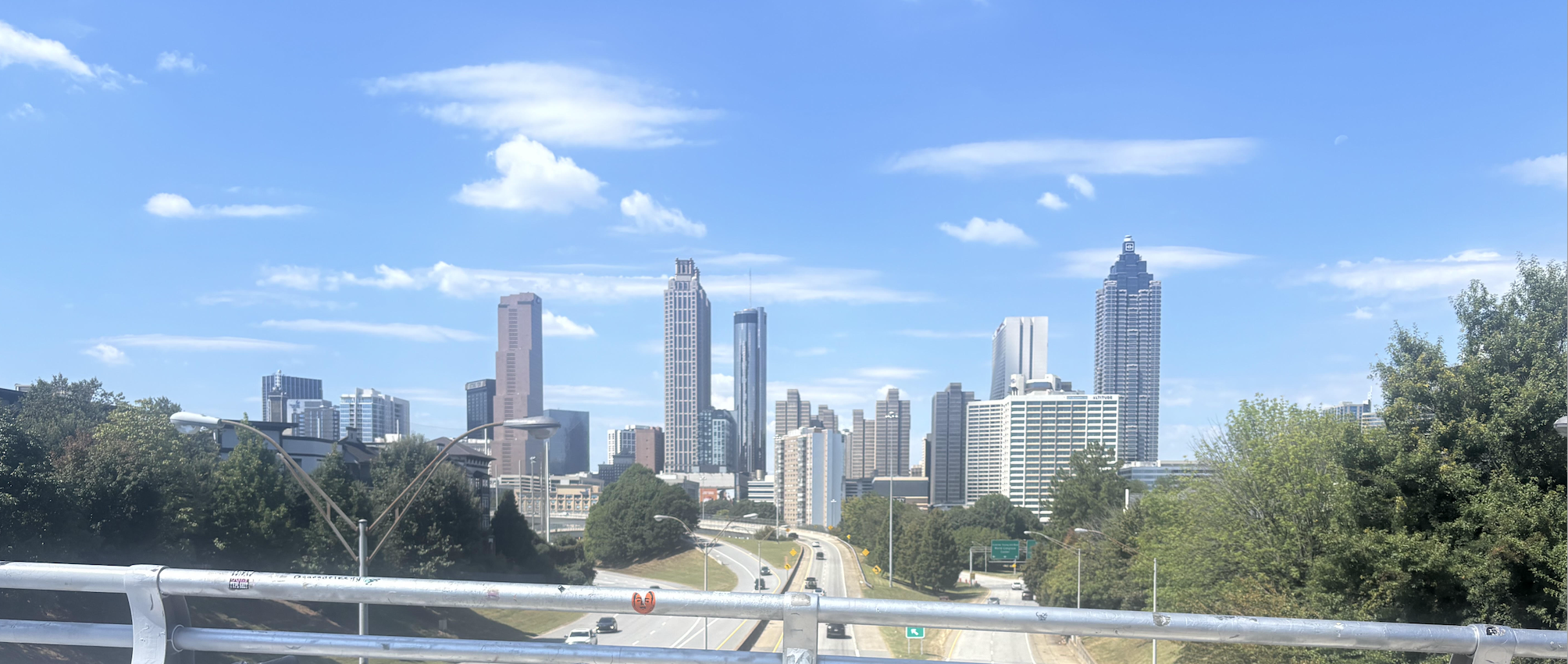
The boundary above includes Coca Cola’s Headquarters.
It includes Georgia Power’s (the Tower of Power) — on the other side of the 75/85 connector.
Studies have shown that in dense urban areas people commonly walk 0.25–0.5 miles (5–10 minutes) each way for lunch. Anything more is too far.
Tangent: it has been cool to see new habits form of folks who are open to walking further, coming to South Downtown. There is a group from the State Bar who make the walk to Spiller Park just about every day. Round trip it’s a mile.
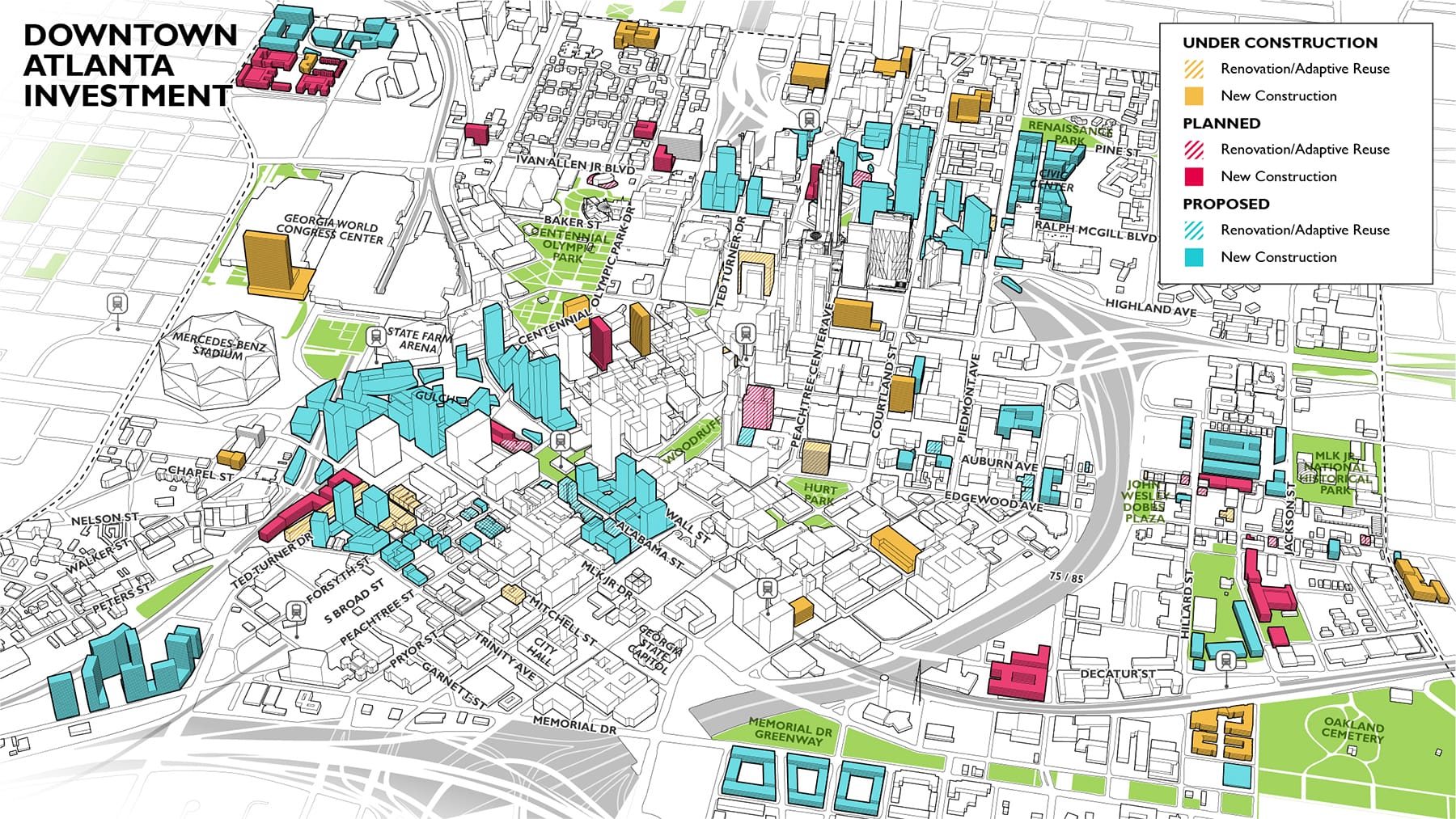
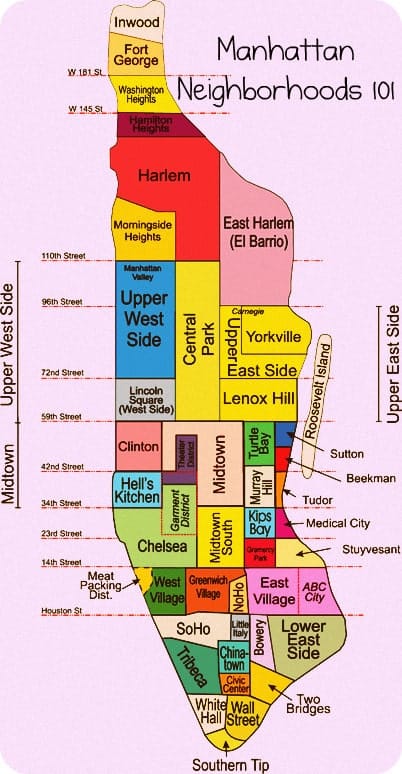
So what, downtown Atlanta is large and undefined, why does this matter?
Definition, nomenclature, brand, and way finding are all essential to create an experience people understand and enjoy.
When you’re talking to a friend about heading downtown, are you talking about hitting up the bar at the Hyatt Regency, relaxing at Joystick off Edgewood, grabbing wings at Magic City, heading to an art gallery in Castleberry Hill, going to a Hawks game? There’s a thousand iterations of “going downtown.” Inversely in Midtown which has approximately the same square mileage; Morningside vs. Piedmont Park vs. Atlantic Station vs. Ansley Park all have clear definition.
People provide definition and housing holds people.
Visitors and locals alike crave clarity and right now downtown Atlanta offers very little. If you peek over at the Downtown Atlanta Wikipedia page there are 17 "neighborhoods" in downtown Atlanta and two of them I had never heard of before this post.
Auburn Avenue Corridor - Cultural District
Castleberry Hill - Arts District
Centennial Hill - Energy District
Centennial Park - Tourism District
Centennial Yards (CY) - Entertainment District
Edgewood Avenue Corridor - Nightlife District
Fairlie-Poplar - Residential District
Underground - Music & Shopping District
Five Points - Transportation District
Garnett - Civic District
Georgia State University (GSU) Campus - Education District
Congress Center - Sports & Events District
Government Walk - Government District
Grady Memorial Hospital (GMH) Campus - Medical District
Peachtree Center (PTC) - Business District
South Downtown (SoDo) - Tech District
Whitehall Corridor - Industrial District
Doesn't it seem odd for one of the most populated cities in the country to have 600 acres bundled into one broad geography: downtown?
Atlanta's downtown has been through it's metamorphosis and portions of our downtown are still going through the vicious loop of doom written about so often since Covid.
How cities reverse the doom loop is likely as unique as the city in itself. One thesis; our thesis is start with the oldest, original, (expensive) cluster of existing buildings and restore and preserve them as much as possible. Repurpose the dilapidated, run down urban core and spark new life with entrepreneurs, restauranteurs who are unique, boutique, and local, while also sprinkling as much housing as the financial markets will allow is one stratagem.
Fortunately for Atlanta, multiple downtown defining endeavors are underway most notably Centennial Yards where $7.5B of new hotels, restaurants, and venues are being developed.
If Atlanta is going to be the best version of herself, we must first define the nebulous and disconnected nomenclature around downtown – perhaps we even reduce the scope? We have 640 acres of “downtown” that needs defining because it’s only after geographies are defined that people can easily navigate the terrain.
The definition won't come from a forced branding exercise or a thought piece on a blog, instead it will morph through years of investment, new residents, and greater density.